


This informal CPD article ‘Building a Stronger Pipeline of Material Placement System Operators’ was provided by Concrete Pumpers Network (CPN), an organisation aiming to elevate the safety, efficiency and day-to-day practices in the placing industry.
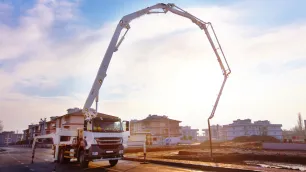
Building a career in concrete pumping takes more than knowing the controls. Material placement operators work with concrete boom pumps, telebelt and loop belt conveyors, city and line pumps, and placing booms. Before placement begins, there are practical questions to ask: Has the equipment been inspected? Is the setup appropriate for the site? Does everyone understand the communication plan? This article recommends looking at both the equipment and the site, not just the controls.
Equipment knowledge, job-site awareness, communication skills, and sound judgment take time to develop. That is why the approach recommended here goes beyond filling an open position: give people a realistic introduction to the job, then build on it through education, supervised practice, feedback, and ongoing learning. For background on the equipment itself, ASME’s public overview of B30.27-2025 describes a standard covering trailer- and truck-mounted material placement systems, including separate placing booms and mobile telescoping boom conveyors. Its scope covers how this equipment is built, installed, operated, inspected, tested, and maintained. (1)
Operating a material placement system
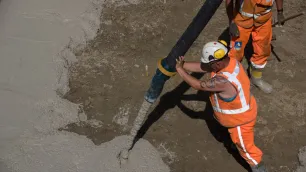
Employers can start by giving prospective operators a clear picture of the job—both its demands and its rewards. Operating a material placement system takes dedication and professionalism. A day in material placement may start early, include travel to an unfamiliar site, and involve changing outdoor conditions. These demands fit within the broader picture of construction equipment work: the U.S. Bureau of Labor Statistics notes that construction equipment operators may work in unpleasant weather, and some have irregular schedules that include nights. (2) Responsibilities vary by company and job site. Owners, operators, managers, supervisors, safety personnel, and other workers may share equipment inspections, work coordination, monitoring of the placement area, and responses to changing site conditions. Troubleshooting and repairs may also be part of the job. Operators need to recognize unexpected conditions, communicate concerns, and respond within their responsibilities. The work can be physically and mentally demanding, but skilled operators also have a chance to contribute to housing, roads, buildings, bridges, and other essential projects. An honest picture helps candidates decide whether the work fits their abilities, interests, and expectations.
Learning the basics
Once a candidate understands the job, the next step is learning the basics: equipment, common terminology, inspection responsibilities, communication methods, and job-site hazards. This introductory education gives new workers a starting point for understanding what they see in the field. It does not replace hands-on training. Its purpose is to help them observe carefully, ask useful questions, and make sense of real job-site conditions.
Foundational education becomes practical ability through supervised, hands-on experience. New operators need opportunities to participate in inspections, equipment setup, communication procedures, and placement activities under the direction of experienced personnel. Depending on the company and job site, guidance may come from an experienced owner, operator, manager, supervisor, safety professional, trainer, or another qualified person. Regular feedback helps trainees develop sound habits and understand how responsibilities may be shared across the work team. Progress can be documented through task checklists, direct observation, and discussions after placements. These measures help identify areas that require additional practice before an operator works more independently.
Final thoughts
Recruitment is one part of building an operator workforce. The approach suggested here is straightforward: give people an honest picture of the job, teach the basics, provide supervised practice, keep track of progress, encourage questions, and keep learning after initial qualification. Each step helps turn interest into ability and ability into consistent performance. For employers and industry organizations, this approach strengthens the pool of qualified operators and reinforces shared professional expectations. For individuals entering the field, it provides something equally important—a clear route from first exposure to competence, confidence, long-term growth, and a fulfilling career in the material placement systems industry.
We hope this article was helpful. For more information from Concrete Pumpers Network, please visit their CPD Member Directory page. Alternatively, you can go to the CPD Industry Hubs for more articles, courses and events relevant to your Continuing Professional Development requirements.
REFERENCES
(1) American Society of Mechanical Engineers (ASME). Material Placement Systems—ASME B30.27-2025. Public product-page description and scope; not the full standard. Accessed October 25, 2026. https://www.scribd.com/document/370596084/307144058-ASME-B30-27-2009-Material-Placement-Systems-pdf
(2) U.S. Bureau of Labor Statistics. Occupational Outlook Handbook: Construction Equipment Operators. Work Environment. Accessed October 25, 2026. https://www.bls.gov/ooh/construction-and-extraction/construction-equipment-operators.htm
Source and non-endorsement note: The sources are cited for informational purposes only. Their inclusion does not imply affiliation with, approval by, or endorsement from ASME or the U.S. Bureau of Labor Statistics. The views and recommendations expressed are the author’s own. The ASME reference identifies its public product-page description and scope; this article is not an official interpretation of, or a substitute for, ASME B30.27-2025. The BLS reference describes construction equipment operators generally, not material placement system operators specifically.